Updated 2026-09-24. Researched from published specifications, capacity ratings and verified owner reviews, not hands-on testing.
Quick answerFor most kids a youth kayak like the Lifetime Shark Youth Kayak (about $129) is easier and more stable than standing on a board; a kids paddle board like the SereneLife 7'9" kids inflatable SUP (about $86) works well for water play and balance practice under close supervision.
A youth kayak keeps a child seated low with a paddle in both hands, which most kids find easier and less scary than balancing standing up. A kids paddle board is lighter and more playful, better suited to shallow water play, kneeling, and gradual balance practice than to open-water paddling. For most families choosing one boat for a child, the Lifetime Shark Youth Kayak at about $129 is the more stable, more forgiving pick. Add a SereneLife 7'9" kids inflatable SUP at about $86 for shallow-water play, yoga, and balance practice.
Is a kayak or a paddle board easier for a kid to learn?
A kayak is easier for almost every child. Sitting down with a low center of gravity means a young paddler is stable from the first stroke, and a double-bladed paddle is intuitive to use with both hands. Standing on a paddle board asks a child to hold balance on a moving surface, which takes real practice and works best in ankle-to-knee-deep water at first, with an adult close by. Kids who already swim confidently and enjoy balance challenges often do fine on a board with patience; kids who are more cautious or younger usually do better seated in a kayak from day one.
What size kayak or paddle board fits a child?
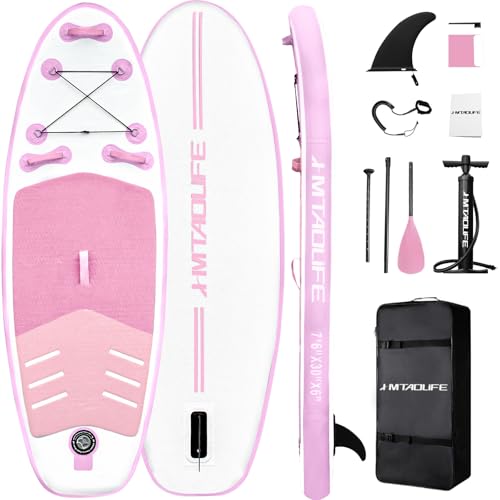
Youth kayaks are built specifically smaller and lighter than adult kayaks, typically around 6 feet long and rated for roughly ages 5 to 12 depending on the model, like the 6 foot, 130 lb rated Lifetime Shark Youth Kayak. Kids paddle boards follow a similar idea at a smaller scale than adult SUPs, such as the 7'9" by 30 inch SereneLife kids inflatable SUP, rated to 200 lb, which comfortably fits one child plus room to kneel or sit rather than only stand. Never put a child in an adult-sized kayak or on a full-length adult board expecting it to work the same; the extra length and weight rating are built for a bigger paddler's leverage, not a smaller one's safety margin.
What life jacket rules apply to kids paddling?
Life jackets for children are sized by weight, not age, under USCG classes: infant under 30 lb, child 30 to 50 lb, youth 50 to 90 lb, and adult sizing above about 90 lb. A kayak, canoe or paddle board outside a designated swim or surf area counts as a vessel under federal rule, meaning one USCG-approved PFD must be aboard for every person, including a child. Most states go further and require kids under a set age, commonly 13, to actually wear the PFD at all times on a moving vessel rather than just have one nearby; check your state's specific age cutoff before you launch, since it varies. Inflatable PFDs are not appropriate for kids at any age; always use a solid foam, properly sized child or youth vest.
Shop the options
An even spread across the price range, cheapest to premium. Prices at last check.
The picks from this page with current prices, in one email, so you can decide later.
Used only to send the list.
Frequently asked questions
Should I get my kid a kayak or a paddle board?
For most kids, especially younger or more cautious ones, a youth kayak is easier and safer because sitting low keeps balance simple and a double-bladed paddle is intuitive. A kids paddle board is a great add-on for shallow-water play, kneeling, and balance practice, but expect more falls and closer supervision while a child learns to stand.
What size life jacket does my child need for paddling?
Children's life jackets are sized by weight, not age: infant under 30 lb, child 30 to 50 lb, and youth 50 to 90 lb, with adult sizing above roughly 90 lb. Weigh your child and match the label rather than guessing from age, since kids grow at different rates and a poorly fitted vest can ride up and fail to keep the child's head above water.
Do kids have to wear a life jacket on a kayak or paddle board?
Federal rule requires one USCG-approved PFD be aboard for every person on a kayak, canoe or SUP outside a designated swim or surf area. Most states go further and require children under a set age, often 13, to actually wear it at all times on a moving vessel. The exact age cutoff varies by state, so check your state's boating rules before you launch.
What age can a kid use a paddle board or kayak alone?
There is no single federal age cutoff, and it depends heavily on the individual child's swimming ability, comfort in water, and the paddling conditions. Youth kayaks and kids paddle boards are generally built for roughly ages 5 to 12, but even within that range close adult supervision in shallow, calm water is the standard recommendation rather than any specific solo age.
Can two kids share one kayak?
A single youth kayak like the Lifetime Shark is built and rated for one child at a time; putting two kids in a boat rated for one exceeds its safe capacity and affects stability. If you want to paddle with two children, look at a tandem or family-sized inflatable kayak rated for the combined weight, with an adult paddling alongside or in the boat with them.
On the water: Wear a properly fitted, USCG-approved life jacket every time, dress for the water temperature rather than the air, and check your state and local paddling regulations before you launch.
This is researched general information, not professional advice. Sizing figures are starting points: confirm against the maker's own sizing chart and the capacity printed on the boat or board.
 SereneLife 7'9" Kids Inflatable Stand Up Paddle Board - SUP for Youth with Single-Action Pump, Adjustable Paddle & Backpack - 30" Wide Stable Design with Non-Slip EVA Deck Pad, Ages 5+, 200lb Capacity 7'9" / 30" wide / 200 lb max / 13 PSI