 Inflatable Kayak for 2 People with Detachable Canopy, Reinforced Paddles 2-person
 $99.97 View on Amazon
Sizing specs: Inflatable Kayak for 2 People with... Comparisons
Quick answerMost people who lack a garage, roof rack or truck bed should buy an inflatable kayak like the Intex Explorer K2 (about $142); paddlers who want maximum speed, tracking and durability for frequent use should buy a hard-shell kayak like the Pelican Argo 100X EXO (about $400).
The real difference between an inflatable and a hard-shell kayak is not how they paddle on a calm afternoon, it is what they demand from you the rest of the time: storage space, a way to transport them, and setup effort. If you rent, live in an apartment, or drive a small car, an inflatable like the Intex Explorer K2 at about $142 removes those barriers. If you have a garage and a roof rack and paddle often enough that ten minutes of pump time each trip gets old, a hard-shell like the Pelican Argo 100X EXO at about $400 tracks straighter and lasts longer under daily use.
Modern inflatable kayaks use multiple air chambers and, on better models, a rigid drop-stitch floor that holds its shape under paddling pressure the way a hard hull does. A budget inflatable like the Intex Explorer K2 uses simple air-chamber construction and flexes more in chop; a performance inflatable like the PPOLB 12'6" drop-stitch kayak, rated to 507 lb, holds a straighter line and feels closer to a hard shell on the water. Hard-shell kayaks like the Pelican Argo 100X EXO are still stiffer, faster to launch, and immune to punctures, which is why frequent paddlers on the same local water still prefer them.
No, not in normal recreational use. Quality inflatable kayaks use multiple layers of PVC or reinforced drop-stitch material designed to resist abrasion from sand, rocks and gentle bumps, and most owners paddle for years without a puncture. Sharp rocks, oyster beds, and dragging the hull repeatedly over pavement are the real risks. A hard-shell kayak cannot puncture at all, but it can crack or gouge from a hard impact, which is its own kind of damage that is usually more expensive to fix than patching an inflatable.
Hard-shell kayaks generally track straighter and require less correction stroke because their rigid hull holds its shape and often includes a molded keel line. Budget inflatables flex slightly and can wander more without a skeg fin attached. Premium drop-stitch inflatables close most of that gap. For casual paddling on calm lakes the difference is minor; for longer distance trips or paddling against wind, a hard-shell or premium inflatable will feel noticeably more efficient than a basic inflatable.
| Category | Inflatable | Hard-shell |
|---|---|---|
| Example | Intex Explorer K2, 10'4", 400 lb max | Pelican Argo 100X EXO, 10', 275 lb max |
| Storage when not in use | Duffel bag, closet or car trunk | Needs garage, wall rack, or yard space |
| Transport | Fits in a trunk, no roof rack needed | Needs a roof rack, truck bed, or trailer |
| Setup time | About 10 minutes with a pump | Ready in under a minute, no inflation |
| Tracking, straight-line efficiency | Good, better on drop-stitch models | Better, rigid hull holds a line |
| Durability against impacts | Resists abrasion, can be punctured by sharp rocks | Immune to punctures, can crack from hard impacts |
| Typical price | About $140 to $300 | About $380 to $700 |
| Weight to carry to the water | Light, one person can carry the bag | Heavier, often needs two people or a cart |
| Best for | Apartments, road trips, occasional paddlers | Frequent local paddling, homeowners with storage |
Choose inflatable, such as the Intex Explorer K2, if storage space or a way to transport a hard kayak is your actual obstacle. Most people who never buy a kayak talk themselves out of it over exactly those two problems, and an inflatable removes both. If durability under frequent use and rocky put-ins matters more, the PPOLB 12'6" drop-stitch inflatable closes most of the performance gap while staying packable.
Choose hard-shell, such as the Pelican Argo 100X EXO, if you have a garage or yard to store it, a vehicle that can carry it, and you paddle often enough that saving ten minutes of pump time on every trip adds up. A hard shell also holds its resale value better and needs no inflation checks before launch.
Whichever hull you buy, check your rated capacity against paddler weight plus gear before you load it, and wear a properly fitted PFD every time you launch.
An even spread across the price range, cheapest to premium. Prices at last check.
Inflatable Kayak for 2 People with Detachable Canopy, Reinforced Paddles 2-person  INTEX Explorer Kayak 2-Person Portable Set w/Paddles & Pump, 2-Pack 10'4" / 400 lb max / 2-person
  Aqua Marina Tomahawk Air-K Inflatable Touring Kayak, 1 Person, 12 Ft 4 In 12'4" / 1-person
 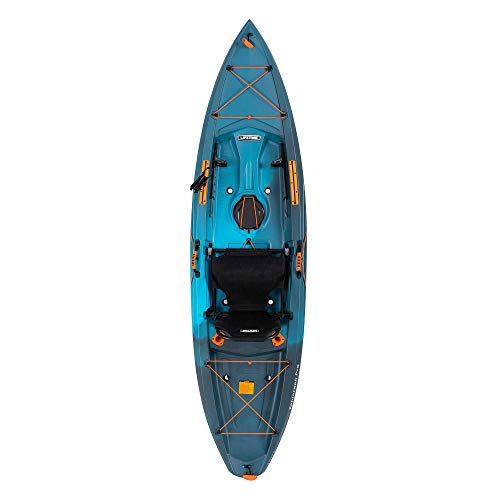 Lifetime Tamarack Pro 103 Sit-On-Top Kayak, Lightning Fusion, 10 ft. 3 in. 10'
  Perception Kayaks - 13.5 Tandem Kayak - Sit on Top - Large Rear Storage with Tie Downs - 13.5 ft - Deja Vu 13'6" / 500 lb max / 2-person
  Oru Haven Foldable Kayak | for 1 or 2 People - Stable, Durable, Lightweight - Lake and River Kayaks - Beginner, Intermediate - Size (Unfolded): 16'1" x 33", Weight: 41 Lbs, Black 16'1" / 2-person
 The picks from this page with current prices, in one email, so you can decide later.
Used only to send the list.For recreational paddling on lakes and slow rivers, a quality inflatable performs close enough to a hard-shell kayak that most casual paddlers will not notice the difference. Hard-shells track slightly straighter and are immune to punctures, but a good inflatable with a drop-stitch floor closes most of that gap while packing down to a fraction of the size.
No. Quality inflatable kayaks use multi-layer PVC or reinforced drop-stitch construction built to resist abrasion, sand, and gentle impacts, and most owners never puncture one in years of use. Sharp rocks, oyster shells, and dragging the hull over pavement are the real risks, and most kits include a patch repair kit for the rare puncture.
Most recreational inflatable kayaks take about 10 minutes to inflate with the included hand or foot pump, reaching a firm paddling pressure. An electric pump cuts that time roughly in half. Deflating and rolling the kayak back into its bag after a trip takes a similar amount of time.
No. A deflated inflatable kayak packs into a duffel bag small enough to fit in a car trunk or back seat, which is the main reason people choose inflatables over hard shells. A hard-shell kayak almost always needs a roof rack, truck bed, or trailer to transport.
A hard-shell kayak generally lasts longer under frequent, heavy use since there is no air chamber to maintain and UV-stable plastics hold up for many years. A well cared for inflatable, stored dry and out of direct sun, can also last many seasons, but it needs more careful storage and occasional valve or seam maintenance that a hard shell does not.
They are worth it if you paddle often, have storage and transport sorted out, and want the stiffest, fastest-launching option. If storage space or a vehicle that can carry a hard kayak is the real obstacle keeping you off the water, an inflatable at a lower price removes that obstacle and gets used more often, which matters more than a small performance gap.
On the water: Wear a properly fitted, USCG-approved life jacket every time, dress for the water temperature rather than the air, and check your state and local paddling regulations before you launch.
This is researched general information, not professional advice. Sizing figures are starting points: confirm against the maker's own sizing chart and the capacity printed on the boat or board.