 Inflatable Kayak for 2 People with Detachable Canopy, Reinforced Paddles 2-person
 $99.97 View on Amazon
Sizing specs: Inflatable Kayak for 2 People with... Gear picks
Quick answerThe best kayak for beginners is the Intex Explorer K2, a two person inflatable rated for 400 pounds that costs about $142 and needs no experience to paddle on flat water.
Which kayak is best for beginners? The Intex Explorer K2, a two person inflatable that costs about $142 and is rated for 400 pounds combined. It is the easiest kayak to own with zero experience: no roof rack, no garage space, and a setup time under 10 minutes. Once you know you like paddling, a hard-shell or a stiffer drop-stitch inflatable will track straighter and last longer, and the two picks below cover that step up.
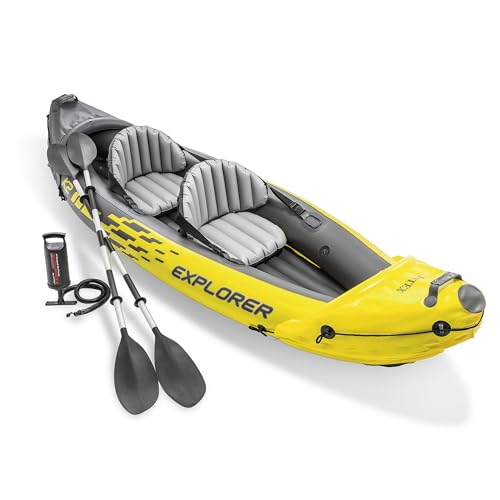
10'4" / 400 lb max / 2-person
The Intex Explorer K2 costs about $142, weighs little enough for one person to carry rolled up, and is rated for 400 pounds combined. It will wander in wind and its included 86 inch paddles run short for its width, but nothing on this page is a simpler or cheaper way to find out whether you actually enjoy kayaking.

10' / 275 lb max
About $508 buys the Pelican Argo 100X, a 10 foot sit-in hard-shell rated for 275 pounds. It needs no inflation, tracks far straighter than any inflatable on this page, and survives rocky landings that would worry an inflatable owner. The tradeoff is a roof rack or trailer to move it and a wider capacity margin to plan around, since 275 pounds is lower than the Explorer K2's 400 pound rating.

10'
The Advanced Elements AirVolution Sport costs about $669 and uses drop-stitch construction to hold a much higher pressure than a basic inflatable, which makes the hull stiffer and faster in the water. It rewards a paddler who already has some stroke technique and wants speed without a hard-shell's storage demands.
Who should not buy this: True first timers who have never sat in a kayak. Learn on the Explorer K2 or the Pelican Argo 100X first and step up to a drop-stitch boat once you know you will paddle often enough to feel the difference.
The right answer depends on budget and how often you expect to paddle. This table compares the three picks on this page.
| Model | Price | Type | Capacity | Best for |
|---|---|---|---|---|
| Intex Explorer K2 | About $142 | Inflatable | 400 lb | Trying kayaking cheaply |
| Pelican Argo 100X | About $508 | Hard-shell sit-in | 275 lb | No inflation, better tracking |
| Advanced Elements AirVolution Sport | About $669 | Drop-stitch inflatable | Check listing | Faster progression |
The easiest kayaks for beginners are wide, short and either sit-on-top or a roomy sit-in, since width adds stability more than length does. A sit-on-top kayak also lets a nervous first timer fall off and climb back on more easily than a sit-in cockpit does; see our sit-in versus sit-on-top comparison for the full tradeoffs. Inflatable kayaks are generally easier to start with than hard-shells simply because they are cheaper to try and require no roof rack, even though a hard-shell tracks straighter once you know you will keep paddling.
Yes. A quality inflatable is genuinely good for a beginner: it is forgiving of poor technique, cheap enough that a bad purchase is not a disaster, and simple to store in an apartment closet. See our full guide on inflatable kayaks for beginners for the durability and puncture questions that come up most. The main downside is wind handling, since a lightweight inflatable gets pushed around more than a hard-shell of the same length.
These picks come from published capacity ratings, listed dimensions and verified owner reviews on Amazon, not in-person testing. We did not paddle these boats ourselves. We prioritized models with a stated weight rating, strong review counts, and a genuine spread across price and boat type so a true beginner can pick a starting point that matches their budget and commitment level.
Match the boat's rated capacity to your actual weight plus gear using the 70 percent rule: divide your combined weight by 0.7 to find the minimum rating you should buy, and check any specific boat with our kayak weight capacity calculator. Most adults between 5'4" and 6'0" fit comfortably in a 10 foot recreational kayak; taller or heavier paddlers should look at 11 to 12 foot boats instead, and our kayak size calculator will size that for you.
Always wear a properly fitted life jacket, check your local regulations before you launch, and treat cold water seriously even on a warm day, since air temperature says nothing about water temperature in spring and fall.
An even spread across the price range, cheapest to premium. Prices at last check.
Inflatable Kayak for 2 People with Detachable Canopy, Reinforced Paddles 2-person  INTEX Explorer Kayak 2-Person Portable Set w/Paddles & Pump, 2-Pack 10'4" / 400 lb max / 2-person
  Aqua Marina Tomahawk Air-K Inflatable Touring Kayak, 1 Person, 12 Ft 4 In 12'4" / 1-person
 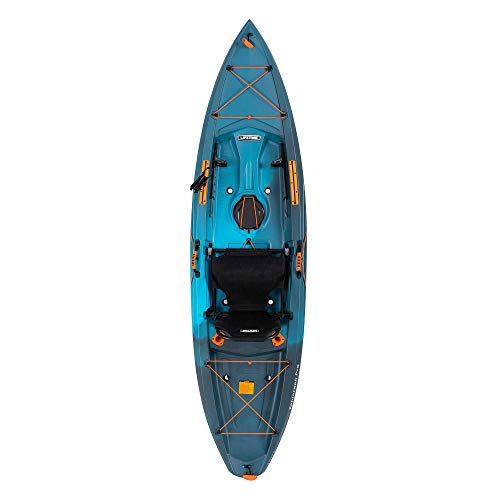 Lifetime Tamarack Pro 103 Sit-On-Top Kayak, Lightning Fusion, 10 ft. 3 in. 10'
  Perception Kayaks - 13.5 Tandem Kayak - Sit on Top - Large Rear Storage with Tie Downs - 13.5 ft - Deja Vu 13'6" / 500 lb max / 2-person
  Oru Haven Foldable Kayak | for 1 or 2 People - Stable, Durable, Lightweight - Lake and River Kayaks - Beginner, Intermediate - Size (Unfolded): 16'1" x 33", Weight: 41 Lbs, Black 16'1" / 2-person
 The picks from this page with current prices, in one email, so you can decide later.
Used only to send the list.The Intex Explorer K2, an inflatable two person kayak rated for 400 pounds that costs about $142, is the easiest and cheapest way to find out whether kayaking is for you. It needs no roof rack, sets up in minutes, and forgives uneven paddling better than a narrow touring boat would.
Inflatable kayaks are usually the better beginner buy because they cost less, need no roof rack or garage space, and let you test the hobby cheaply. A hard-shell tracks straighter and survives rocky launches better, so it makes more sense once you already know you will paddle regularly.
Most adults between 5'4" and 6'0" fit a 10 foot recreational kayak comfortably. Paddlers over 6'2" or 250 pounds should look at 11 to 12 foot boats for more leg room and capacity. Length past 12 feet is aimed at touring speed, not beginner comfort, and adds cost without helping a new paddler.
A wide recreational kayak, generally 29 inches or more, is quite stable and hard to flip on flat water. Narrower touring and performance kayaks trade that stability for speed, which is why beginner picks like the Intex Explorer K2 and Pelican Argo 100X both use wide, forgiving hulls rather than narrow racing shapes.
Paddle length depends on the kayak's width and your height more than your experience level. A wide beginner boat generally needs a longer paddle than a narrow one, and the 86 inch paddles bundled with most budget kits run short for wide hulls. Check our kayak paddle length calculator with your exact boat width.
A basic inflatable beginner kayak like the Intex Explorer K2 costs about $142 including paddles and a pump. A hard-shell sit-in beginner kayak runs closer to $400 to $600, and a stiffer drop-stitch inflatable for a paddler ready to progress runs $600 to $700, before adding a life jacket or roof rack.
On the water: Wear a properly fitted, USCG-approved life jacket every time, dress for the water temperature rather than the air, and check your state and local paddling regulations before you launch.
This is researched general information, not professional advice. Sizing figures are starting points: confirm against the maker's own sizing chart and the capacity printed on the boat or board.