 Sun Ninja Hand Pump for Paddle Board, Inflatable Hammock and Floating Chair
 $18.89 View on Amazon
Gear picks
Quick answerThe best electric SUP pump for most paddlers is the OutdoorMaster Shark 2 (about $100), which reaches 20 PSI in a few minutes without the roughly 425 hand-pump strokes a manual pump needs to hit the same pressure.
An electric SUP pump saves the physical work of a hand pump, nothing more: a typical 10'6" x 33" x 6" board holds about 295 liters of air, and a hand pump needs roughly 425 strokes, about 9 minutes of steady effort, to reach 15 PSI. The OutdoorMaster Shark 2 Electric SUP Pump, about $100, reaches 20 PSI on its own in a few minutes and is the pump to buy if you inflate a board more than a few times a season.

22 PSI
The BAVIZZN Electric SUP Pump reaches 22 PSI for about $47, the least expensive electric pump in this roundup that still hits a pressure high enough for a standard inflatable. It is the pump to buy if you want to skip hand-pumping without paying for a premium name.

20 PSI
The OutdoorMaster Shark 2 Electric SUP Pump reaches 20 PSI for about $100 and comes from a brand with a long track record specifically in SUP pumps rather than general inflatables. This is the pump most paddlers who inflate regularly should buy.
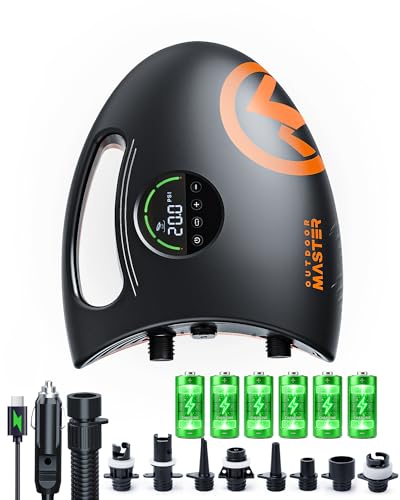
20 PSI
The OutdoorMaster Shark 2S Electric SUP Pump runs on an 88.8Wh rechargeable battery, reaches 20 PSI, and costs about $126. Cordless operation means you can inflate at a put-in with no car outlet nearby, worth paying for if you paddle often or from places without power.
Who should not buy this: An occasional paddler who inflates a board once or twice a month. A hand pump or the cheaper corded Shark 2 above will do the same job for less money.
An electric pump costs more but removes essentially all the physical effort of inflating a board, which matters most if you are pumping up a board solo, often, or right before you want to be on the water rather than out of breath next to it. A hand pump costs less, needs no charging or car outlet, and works as a reliable backup even if you normally use electric. Many paddlers keep a compact hand pump in the car as a backup even after buying an electric one.
| Pump | Type | Price | Max PSI |
|---|---|---|---|
| BAVIZZN | Electric | about $47 | 22 PSI |
| OutdoorMaster Shark 2 | Electric | about $100 | 20 PSI |
| OutdoorMaster Shark 2S | Electric, battery | about $126 | 20 PSI |
| THURSO SURF Double Action | Hand | about $50 | 29 PSI |
| NRS Super Pump | Hand | about $73 | check listing |
See the full electric vs hand pump comparison for a closer look at time and effort tradeoffs, or the SUP PSI chart for target pressure by board type.
If you are not ready to buy electric, a double-action hand pump, one that pushes air on both the up and down stroke, cuts the time and effort roughly in half compared to a single-action pump. The THURSO SURF Double Action Pump reaches 29 PSI for about $50 and is a solid, no-frills choice most paddlers are happy with as either a primary pump or a backup to an electric one.
We researched published specs, rated pressure and verified owner reviews for SUP pumps that sell in volume on Amazon, across both electric and hand types. We did not test inflation times ourselves with a stopwatch; the strokes-and-minutes figures above come from the sizing math for a standard board's air volume at a given PSI, not from our own trials. Where a listing did not state a max PSI, such as the NRS Super Pump, we say so.
An even spread across the price range, cheapest to premium. Prices at last check.
Sun Ninja Hand Pump for Paddle Board, Inflatable Hammock and Floating Chair BAVIZZN Paddle Board Pump, Electric SUP Pump for Paddle Board Inflatables (Orange) 22 PSI  Aoiiefe Paddle Board Pump, 13500mAh Rechargeable 20PSI Portable Paddle Board Electric Pump, USB-C SUP Air Pump, Intelligent Dual Stage Inflation Deflation, Auto-Off 20 PSI
 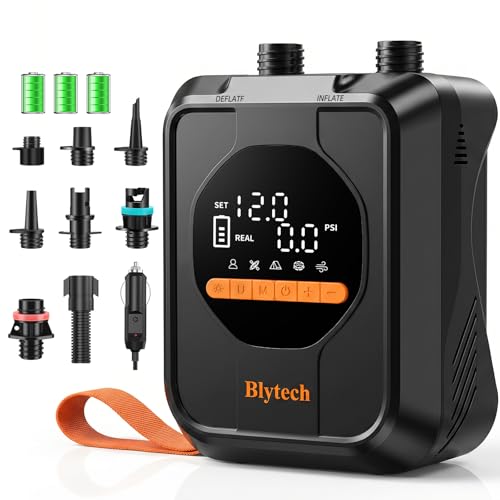 Electric Paddle Board Pump, Portable 20PSI SUP Air Pump with 13,500mAh Rechargeable Battery, Fast Inflation/Deflation, 7 Nozzles for Kayaks, Boats, Tents, and Inflatables (Black) 20 PSI OutdoorMaster Shark 2 High Pressure SUP Pump, Electric Air Pump 20 PSI 20 PSI
  OutdoorMaster Shark 3 Mini 74Wh Portable Paddle Board Pump Electric 15 PSI
 The picks from this page with current prices, in one email, so you can decide later.
Used only to send the list.Yes, if you inflate a board more than occasionally: an electric pump reaches full pressure in a few minutes with no physical effort, versus roughly 425 hand-pump strokes and 9 minutes of work for a hand pump on a standard board. Occasional paddlers, inflating once or twice a month, often find a hand pump is fine and costs less.
A standard 10'6" x 33" x 6" board holds about 295 liters of air. A hand pump needs roughly 425 strokes to reach 15 PSI, about 9 minutes of steady pumping. An electric pump reaches the same pressure in a few minutes with no manual effort, though larger or higher-PSI touring boards take somewhat longer either way.
Most all-around inflatable SUPs run 12 to 15 PSI. Some touring and racing boards call for higher pressure, up to 20 to 22 PSI, for maximum rigidity. Check your specific board's listing or manual for its target PSI, and use a pump with a built-in gauge so you can hit that number precisely.
Only if it reaches a high enough PSI. Many kayak-labeled hand pumps top out around 10 PSI, enough for an inflatable kayak but too low for most SUPs, which need 12 to 15 PSI or more. Check the pump's max rated pressure against your board's target before assuming it will work.
Both types exist. Corded electric pumps plug into a car's 12V outlet and need the vehicle nearby. Battery-powered electric pumps run cordless off a rechargeable battery, more convenient if you are launching somewhere without easy car access, but they need to be charged ahead of time and eventually cost more.
On the water: Wear a properly fitted, USCG-approved life jacket every time, dress for the water temperature rather than the air, and check your state and local paddling regulations before you launch.
This is researched general information, not professional advice. Sizing figures are starting points: confirm against the maker's own sizing chart and the capacity printed on the boat or board.