 Sun Ninja Hand Pump for Paddle Board, Inflatable Hammock and Floating Chair
 $18.89 View on Amazon
Comparisons
Quick answerA hand pump like the ADVANCED ELEMENTS Double Action Pump (about $40) inflates a board to 15 PSI in roughly 425 strokes, about 9 minutes of real effort; an electric pump like the OutdoorMaster Shark 2 (about $100) does the same job with almost no physical effort. Buy electric if you inflate often or inflate more than one board; a hand pump is perfectly fine for occasional single-board use.
A hand pump gets a paddle board to full pressure just as effectively as an electric one, it just takes real physical effort, roughly 425 strokes to reach 15 PSI on a typical 10'6" by 33 inch by 6 inch board. An electric pump like the OutdoorMaster Shark 2 at about $100 removes almost all of that effort at the cost of a heavier unit, a battery or power cord, and a much higher price than a hand pump like the ADVANCED ELEMENTS Double Action Pump at about $40. Most people who inflate one board occasionally do fine with a hand pump; frequent paddlers or anyone inflating multiple boards in a session benefit from going electric.
A typical 10'6" by 33 inch by 6 inch inflatable board holds about 295 liters of air, and reaching a full 15 PSI takes roughly 425 strokes on a standard double-action hand pump, which works out to about 9 minutes of steady pumping for most people. The last few PSI get noticeably harder to push as the board firms up, which is normal and is exactly when a pressure gauge, like the one built into the ADVANCED ELEMENTS Double Action Pump, matters most so you stop at the right pressure instead of over- or under-inflating.
Significantly, and with almost none of the physical effort. Electric pumps like the OutdoorMaster Shark 2, rated to 20 PSI, run off a rechargeable battery or a 12V car outlet and do the pumping for you while you set up the rest of your gear. Some models push this further: the OutdoorMaster Shark 3 is rated for full inflation in about 3 minutes 50 seconds, faster than most people can complete 425 hand-pump strokes, let alone recover from them.
A hand pump is lighter, smaller, needs no battery or charging, never breaks down electronically, and costs a fraction of an electric unit's price. For someone who owns one board and inflates it a handful of times a season, that simplicity and reliability outweighs the extra effort of pumping by hand. A hand pump is also the more dependable backup to carry even if you normally use an electric pump, since it never runs out of battery mid-trip.
| Category | Hand pump | Electric pump |
|---|---|---|
| Example | ADVANCED ELEMENTS Double Action Pump, 15 PSI | OutdoorMaster Shark 2, 20 PSI |
| Effort required | About 425 strokes, roughly 9 minutes of physical pumping | Minimal, pump does the work |
| Inflation time | About 9 minutes of active effort | Around 4 to 10 minutes depending on model, hands-free |
| Power source | None needed | Rechargeable battery or 12V car outlet |
| Weight and bulk | Light, packs small | Heavier, larger unit to carry and store |
| Typical price | About $19 to $45 | About $47 to $170 |
| Reliability | Never runs out of charge | Depends on battery charge or a power source |
| Best for | Occasional single-board inflation | Frequent paddlers or multiple boards per session |
Choose the ADVANCED ELEMENTS Double Action Pump if you inflate one board occasionally and would rather save the money than the effort. It reaches the same 15 PSI a board needs, includes a pressure gauge so you know when to stop, and costs a fraction of an electric unit.
Choose the OutdoorMaster Shark 2 if you paddle often enough that repeated hand pumping gets old, if you regularly inflate more than one board, or if physical exertion is a real barrier for you. For the fastest possible setup, the OutdoorMaster Shark 3 rated at about 3 minutes 50 seconds per board is worth the higher price if speed matters most.
Whichever pump you use, do not exceed the board's rated PSI, and remember pressure climbs roughly 1 PSI for every 25 degrees Fahrenheit the board heats up, so avoid leaving a fully inflated board sitting in direct sun.
An even spread across the price range, cheapest to premium. Prices at last check.
Sun Ninja Hand Pump for Paddle Board, Inflatable Hammock and Floating Chair  BAVIZZN Paddle Board Pump, Electric SUP Pump for Paddle Board Inflatables (Orange) 22 PSI
  Aoiiefe Paddle Board Pump, 13500mAh Rechargeable 20PSI Portable Paddle Board Electric Pump, USB-C SUP Air Pump, Intelligent Dual Stage Inflation Deflation, Auto-Off 20 PSI
 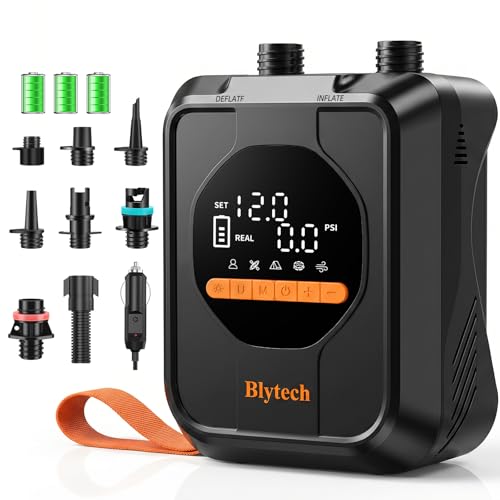 Electric Paddle Board Pump, Portable 20PSI SUP Air Pump with 13,500mAh Rechargeable Battery, Fast Inflation/Deflation, 7 Nozzles for Kayaks, Boats, Tents, and Inflatables (Black) 20 PSI
  OutdoorMaster Shark 2 High Pressure SUP Pump, Electric Air Pump 20 PSI 20 PSI
  OutdoorMaster Shark 3 Mini 74Wh Portable Paddle Board Pump Electric 15 PSI
 The picks from this page with current prices, in one email, so you can decide later.
Used only to send the list.It is worth it if you paddle often, inflate more than one board per outing, or find hand pumping physically tiring. For someone inflating a single board occasionally, a hand pump does the exact same job for a fraction of the price, just with about 9 minutes of active effort instead of a hands-free wait.
A typical 10'6" by 33 inch by 6 inch board holding about 295 liters of air takes roughly 425 strokes on a standard hand pump to reach 15 PSI, which works out to about 9 minutes of steady pumping. The last portion of strokes gets noticeably harder as the board firms up near full pressure.
Most inflatable paddle boards are designed for 12 to 15 PSI, with some higher-performance boards rated up to 20 to 29 PSI. Always check the specific pressure rating printed on your board's valve or listing rather than assuming a universal number, and stop at the rated PSI rather than over-inflating.
Most electric paddle board pumps run on a rechargeable internal battery that needs charging before a trip, similar to a phone, though some models can also run directly off a 12V car outlet. Check the specific pump's battery capacity and charge time before relying on it for a trip away from a power source.
Yes. A quality hand pump like the ADVANCED ELEMENTS Double Action Pump reaches the same 15 PSI most boards call for, and some hand pumps go higher. The difference between hand and electric pumps is effort and speed, not the maximum pressure either one can achieve.
On the water: Wear a properly fitted, USCG-approved life jacket every time, dress for the water temperature rather than the air, and check your state and local paddling regulations before you launch.
This is researched general information, not professional advice. Sizing figures are starting points: confirm against the maker's own sizing chart and the capacity printed on the boat or board.